And a bit of news...
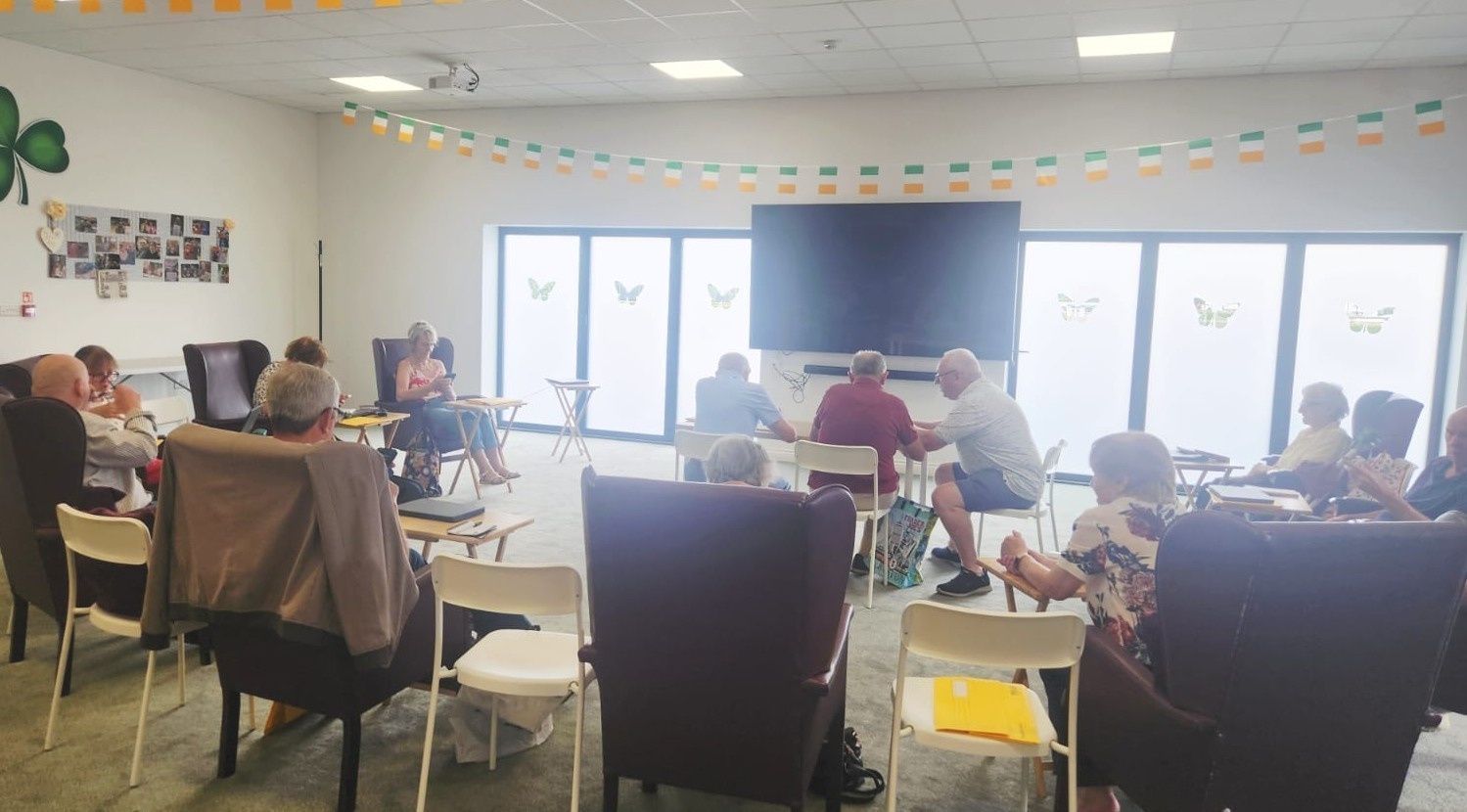
Conradh na Gaeilge and Birmingham Irish Association are working together to bring you free Irish classes at the Irish Centre in Kings Heath.
Classes will be aimed at beginners and returners.

Cúpla Focal – Mí Iúil 2026
Dia daoibh a chairde – Hello everyone
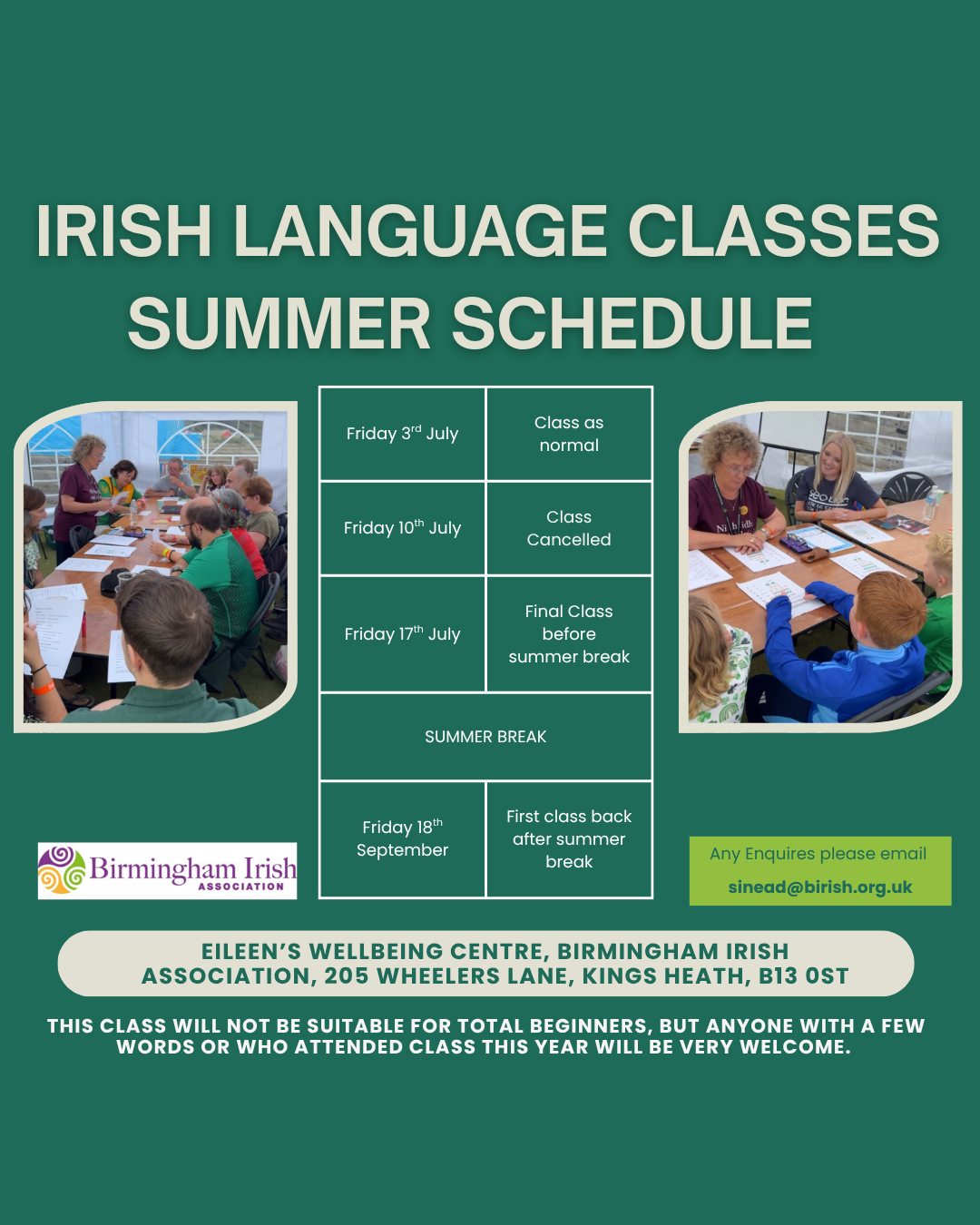
Tá an téarma críochnaithe anois ag an Ionad Éireannach in Kings Heath ach beidh muid ar ais i Méan Fómhair.
Term has now finished for our Irish class at the Irish Centre in Kings Heath, but we’ll be back in September. If you have a little Irish already and would like to join us, do come along on Friday 18 September at 4pm.
If you are a total beginner, classes are available with Conradh na Gaeilge Birmingham.
To join a beginners’ class, contact Lars via email lars@gaeilge.uk or lars@kabel.me.uk
And a bit of news...
Conradh na Gaeilge and Birmingham Irish Association are working together to bring you free Irish classes at the Irish Centre in Kings Heath.
Classes will be aimed at beginners and returners.
Recently in our live class we’ve been thinking about holidays. Firstly, here is a list of countries that will be useful to you when talking about holidays:
Éire – Ireland
Sasana – England
Albain – Scotland
An Bhreatain Bheag – Wales (Little Britain)
An Fhrainc – France
An Ísiltír – The Netherlands (The Low Country)
An Spáinn – Spain
An Ghréig – Greece
An Pholainn – Poland
An Rúis – Russia
An Ucráin – Ukraine
An tSualainn – Sweden
Meiriceá – America
Na Stáit Aontaithe – The United States
Ceanada – Canada
An tSín – China
An tSeapáin – Japan
Notice that many of the names of countries in Irish use An, the definite article, (English the) but not all of them! Éire and Sasana, for example, don’t use the word An. When learning the names of countries be sure to learn them with the word An.
Questions you might ask:
1. Cá bhfuil tú ag dul? - Where are you going?
2. Cá hait? - Where?
3. Cá bhfuil tú ag dul ar saoire i mbliana? - Where are you going on holiday this year?
4. Cé atá ag dul leat? - Who is going with you?
5. Cén fhad atá tú ag dul ann? - How long are you going for?
6. An bhfuil tú/sibh ag dul…? - Are you/ye going…?
7. ar an eitleán - by plane.
8. ar an bhád - by boat.
9. sa charr - in the car.
Some possible answers:
(Numbers of questions and answers match)
Notice you use go for countries that don’t have the An, but go dtí before An:
Beir bua,
Terri

Welcome to another Birmingham Irish Association news update
We publish news and project updates keeping you up to date with details regarding our services and events, as well as other local developments and other news that will be of interest to our clients as well as other visitors.
E-Newsletter Frequency
We currently publish our e-news on the last day of each month. There may sometimes be other alerts.
Register for our e-newsletter by clicking the news tab located below.

Search This Website: Use the search box (right) to look for content on this website. Type or speak the relevant words using the icons.
Telephone: 0121 604 6111
Send Fax: 0121 604 6662
Email: info@birish.org.uk
Birmingham Irish Association
The Irish Centre
205 Wheelers Lane, Kings Heath
Birmingham B13 0ST
West Midlands
Birmingham Irish Association is a Registered Charity No. 1072258 : Company Limited by Guarantee No. 3628076
Privacy Statements | Website powered by : Duda Site Builder | Website Developed and Managed by : First Stop Web Design
We have taken all steps within our means to ensure this website broadly complies with W3C and The Equality Act standards